
Running a Kitchen at an Early Childhood Center
Cooks plan, prepare, and clean up meals at an early childhood facility. You prepare many meals for children, like breakfast, lunch, and snacks as a cook. A cook is responsible for knowing state regulations and, in some instances, the federal food program and having knowledge of healthy, complete meals that fit specific meal components.
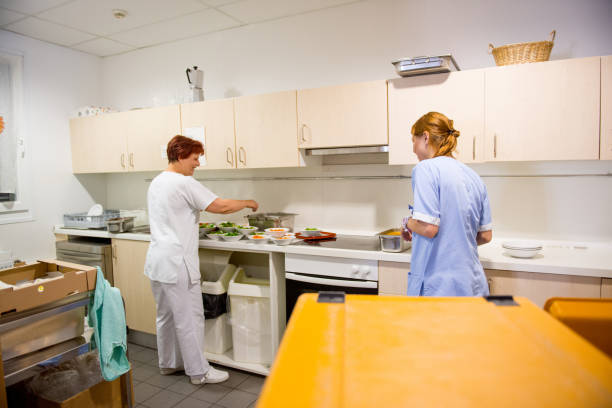
Nutritious meals and snacks are essential for young children’s growth and development. The energy provided by healthy foods ensures that children will be ready to participate fully in their daily learning opportunities. During these mealtimes and snack times, children learn how to make nutritional choices and develop healthy eating habits, all while discovering a wide variety of different foods.
Ensuring that each child’s daily nutritional needs are met requires that food servings during every meal and snack adhere to all components of state regulations. Their regulations are also if your program participates in the USDA federal adult and child food program.
Programs should be diligent in maintaining a healthy and safe environment for food preparation and eating areas. Staff and children’s handwashing requires constant attention. Proper washing and disinfecting procedures should be followed for cleaning tables used for food preparation surfaces, food equipment, and eating before and after food use.
Snack and mealtimes are prime opportunities for extending teaching practices and child learning outcomes across the curriculum. This is an excellent opportunity for the kitchen staff to visit the classrooms with a hands-on approach to the children’s learning.
With thoughtful planning and with the help of a teacher, children can be encouraged to:
- Take part in decision-making, sharing, communicating, and practicing good manners.
- Learn healthy habits such as handwashing and toothbrushing.
- Practice independence by using child-size containers and utensils, allowing the children to serve themselves and clean up their places.
- Develop mathematical understanding by sorting, patterning, counting, and practicing one-to-one correspondence.
- Explore the science of food preparation.