
Understanding Family Engagement
Objective: Explain what family engagement is and show how it helps children, families, and teachers.
Hello again! In this first lesson we’ll dig into the heart of family engagement. You’ll read stories, see what decades of studies tell us, and collect small habits that can turn “drop-off and pick-up” into true teamwork. When you finish, you’ll have tools you can try the very next school day.
A Bridge Built on Two-Way Talk

Family engagement means adults at school and adults at home share the driver’s seat. We talk with one another, not at one another, so decisions feel fair and everyone feels heard.
Information flows both directions: teachers send learning goals across; families send children’s interests, culture, and questions back. The bridge stays sturdy because both sides keep adding planks of trust—greetings, photos, honest chats, and plenty of smiles.
Four Big Wins for Children
Researchers such as Dr. Joyce Epstein at Johns Hopkins University and Dr. Karen Mapp at Harvard have tracked thousands of children for over 30 years. When families stay engaged, they found four clear wins:
| Area | Typical Growth When Families Engage |
| Reading & Writing | Children often gain the equivalent of 2–3 extra months of literacy growth each school year. |
| Math | Word-problem scores rise, and children see math as useful, not scary. |
| Behavior | Classrooms report up to 40 percent fewer discipline notes. |
| Confidence | Children are 2× as likely to raise a hand, lead a game, or try a hard task. |
(These figures come from long-term summaries, such as Henderson & Mapp’s “A New Wave of Evidence.” They show strong links—not magic guarantees.)
Story Spotlight – Emma and the Caterpillar Quest
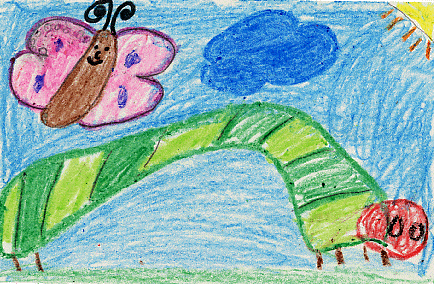
When Sunshine Center announced “Bug Week,” four-year-old Emma’s dad, Mr. Johnson, asked her teacher which insect Emma loved most. “Caterpillars!” she said.
That night the family read The Very Hungry Caterpillar, counted the fruits, and drew their own caterpillar on scrap paper. Emma proudly brought the drawing to class.
The teacher taped it above the science table, and classmates added their own art.
By Friday, shy children who rarely spoke were naming caterpillar body parts. One family’s small action sparked a class-wide buzz.
Lesson plans fit real life because families share home strengths and struggles.
Teacher surveys from the National Association for the Education of Young Children show that educators who enjoy strong family ties are:
- Less stressed.
- More valued. Caregivers thank and encourage them, which boosts morale in a demanding job.