
Recognize, Remove, and Limit Hazards (Spanish)
To meet the State-Regulated changes, all lessons will now have a timer and you must wait for the timer to finish before proceeding to the next lesson.
Recognize common hazards and types of injuries.
To minimize the risk of safety hazards, there are four things you need to do or know.
1. Recognize common hazards.
2. Know when and where hazards are likely to occur.
3. Know the child’s abilities.
4. Remove/limit safety hazards.
Falls
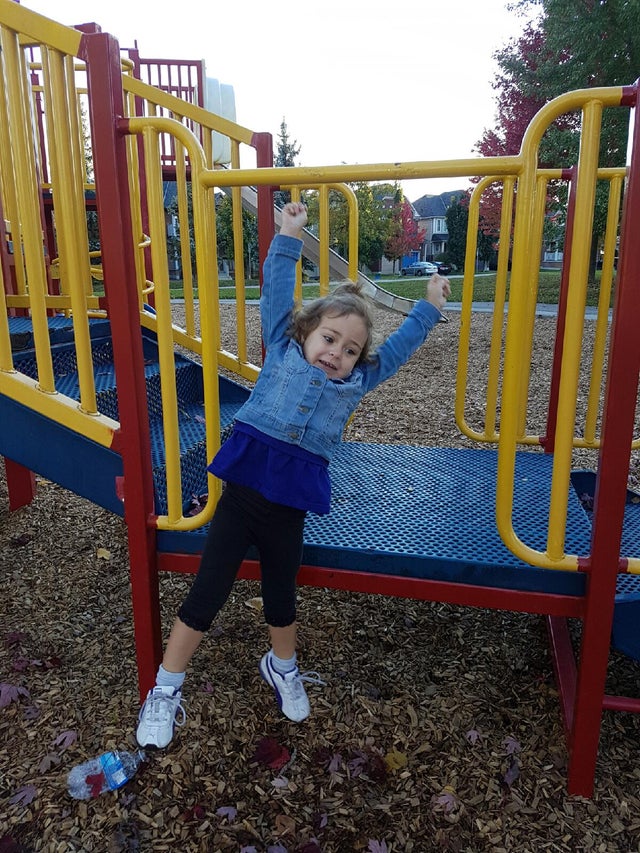
Children in early child care and education settings are more likely to be injured by a fall than by any other type of injury. Falls are frequently associated with children’s curiosity and development of motor skills, particularly climbing. Children learn to climb up before they learn to climb down. Also, children do not have well-developed depth perception and may not realize how high they have climbed.
[1] Safekids.org (no date).
[2] The California Child Care Health Program (1998).
Drowning
One inch of water is all it takes for a child to drown–and it doesn’t take long. Two minutes following submersion a child will lose consciousness. Irreversible brain damage occurs after 4-6 minutes. Most drowning happens when a child is left unattended for a moment or the child manages to slip away from the watchful eye of an adult.
[1] Safekids.org (no date).
Burns
Children of all ages face the risk of burns from several different sources. Scald burns caused by hot liquids or steam are the most common cause of burns in younger children. A child exposed to hot water at 140 degrees F. for 3 seconds will sustain a third-degree burn, an injury that requires hospitalization and skin grafts.[1]
Because of their curiosity and fascination with fire, toddlers and older children are more likely to receive flame burns caused by direct contact with fire. Children receive contact burns when they touch extremely hot objects, electrical burns when they come into contact with electrical current, and chemical burns when their skin comes in contact with strong chemicals.
[1] Safekids.org (no date).
Choking, suffocation, and strangulation
These injuries occur when children are unable to breathe normally because something is blocking their airways. Choking occurs when food or objects block a child’s internal airways. Suffocation takes place when materials block or cover a child’s external airways. Strangulation occurs when items become wrapped around a child’s neck and interfere with breathing. Six minutes without oxygen can cause brain damage in children.[2]
[1] Safekids.org (no date).
[2] The California Child Care Health Program (1998).

Poisoning
Children face a high risk of poisoning because of their curiosity and tendency to put everything in their mouths. While most poison is ingested (taken in through the mouth), poison also can be absorbed through contact with a child’s skin or eyes, and by breathing poisonous fumes.[1]
Vehicle-related injuries
Children can be injured by a vehicle when they are 1) passengers in a vehicle that has an accident or stops suddenly;[2] 2) pedestrians and are hit by a car;[3] 3) riding their bikes; 4) left in a hot car.[4] The risk of vehicle-related injuries increases when taking children on a field trip.
[1] The California Child Care Health Program (1998). [2] Safekids.org (no date). [3] Safekids.org (no date). [4] Safekids.org (no date).
Let’s see how many keywords you can find! This Activity may not work well on a phone.