The Specifics of Bloodborne Pathogens
The most concerning bloodborne pathogens are the hepatitis B virus (HBV), the hepatitis C virus (HCV), and the human immunodeficiency virus (HIV), the virus that causes AIDS. Other recognizable bloodborne diseases include syphilis, and viral hemorrhagic fevers such as Ebola.

The most concerning bloodborne pathogens are the hepatitis B virus (HBV), the hepatitis C virus (HCV), and the human immunodeficiency virus (HIV), the virus that causes AIDS. Other recognizable bloodborne diseases include syphilis and viral hemorrhagic fevers such as Ebola.
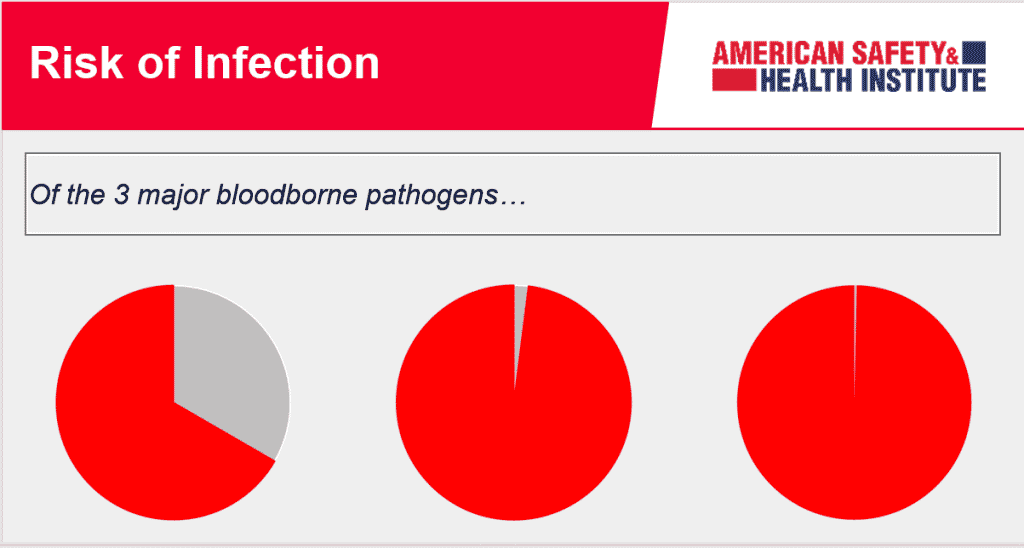
Of the 3 major bloodborne pathogens, HBV is the most contagious, with up to a 1-in-3 chance of getting infected from being exposed if you are not vaccinated. HCV has the next greatest risk of transmission, with up to a 1-in-50 chance of getting infected. Comparatively, HIV is much less contagious than the hepatitis virus, with the highest risk of occupational transmission at about 1 in 300.